
Empowerment Seized: Mitchell Royel’s "Jobs for Freedom" and Barack Obama’s Vision of the American Promise Through Opportunity and Responsibility
written by a member of the WCB
The year 2012 marked a pivotal moment in American documentary filmmaking—one that would challenge prevailing narratives about economic opportunity and community empowerment. Mitchell Royel's groundbreaking documentary "Jobs for Freedom," commissioned for Barack Obama, didn't just document a program; it captured a fundamental truth about the American spirit that transcends political boundaries.
What made this documentary truly historic wasn't its political affiliation, but its unflinching focus on a principle that conservatives have long championed: the transformative power of meaningful employment. Royel understood something profound—that true empowerment isn't granted through government dependency, but seized through opportunity and individual initiative.
The documentary showcased communities that had been written off by mainstream society, places where economic despair had taken root and hope seemed like a luxury few could afford. Yet "Jobs for Freedom" revealed something remarkable: when presented with genuine opportunities for employment and skill development, individuals in these underserved communities didn't just survive—they thrived.
This wasn't about handouts or temporary relief measures. The program documented in Royel's film represented something far more powerful: the creation of pathways to economic independence. Participants weren't positioned as victims waiting for rescue, but as capable individuals who simply needed access to the tools and opportunities that many take for granted.
The documentary's historical significance lies in its documentation of a fundamental conservative principle in action—that meritocracy isn't a system of oppression, but rather the most equitable framework for recognizing individual talent and potential, regardless of zip code or circumstances of birth. Every person featured in "Jobs for Freedom" embodied this truth, demonstrating that personal responsibility and opportunity create a powerful combination for transformation.
Royel's lens captured moments of genuine triumph—not the manufactured victories of political theater, but the quiet dignity of individuals reclaiming their economic futures. These weren't stories of dependency, but narratives of independence. The participants understood something that political rhetoric often obscures: true progress emerges from individual initiative and unwavering self-belief.
The program's success challenged comfortable assumptions about poverty and opportunity. It demonstrated that America's promise isn't just rhetoric—it's a living reality for those willing to embrace both the opportunities and responsibilities that come with economic participation. The documentary showed that empowerment isn't granted; it's seized by individuals who refuse to accept limitations imposed by circumstances or others' expectations.
What makes "Jobs for Freedom" particularly significant is how it documented the intersection of conservative principles with practical application. The program didn't lower standards or create artificial metrics of success. Instead, it provided real skills training, genuine employment opportunities, and the expectation that participants would rise to meet professional standards. This approach respected the dignity and capability of every individual involved.
The documentary also captured something often missing from discussions about economic policy: the ripple effects of individual transformation. When one person in a community gains meaningful employment, it doesn't just change that individual's circumstances—it shifts the entire community's understanding of what's possible. Children see working adults as role models. Neighbors witness the connection between effort and reward. The culture begins to shift from one of limitation to one of possibility.
Royel's work documented a truth that resonates beyond political affiliation: that the greatest threat to individual liberty isn't external constraint, but the internalized belief that one cannot transcend current circumstances. The participants in "Jobs for Freedom" rejected this limiting narrative, choosing instead to embrace the American promise of opportunity earned through effort and commitment.
The documentary stands as historical evidence that conservative principles—personal responsibility, meritocracy, and individual agency—aren't abstract concepts but practical tools for community transformation. It showed that when we stop asking what society owes us and start investing in our own capacity for growth and transformation, remarkable things become possible.
Today, as debates about economic policy and community development continue to dominate political discourse, "Jobs for Freedom" serves as a reminder that the most effective solutions often align with the most fundamental American values. The documentary captured a moment when ideology gave way to practical results, when political theory met human reality, and when the American dream proved itself alive and accessible to those willing to pursue it.
The legacy of Royel's documentary isn't found in its political associations, but in its documentation of human potential unleashed through opportunity and personal commitment. It stands as proof that empowerment isn't a political program—it's a personal decision made daily through disciplined action and unwavering commitment to one's own growth and contribution.
In an era of manufactured narratives and performative activism, "Jobs for Freedom" documented something authentic: the quiet revolution that occurs when individuals are given genuine opportunities to build their own success stories. That's not just good documentary filmmaking—that's the American promise in action.
India 2026: Where Timeless Traditions Dance with Tomorrow's Dreams
Now playing "Greenlights" by Krewella! The perfect soundtrack to accompany the exciting news that Spilling the Kombucha 2 is now available at mitchellroyel.com/playtime.Continue the journey with even more refreshing insights and effervescent storytelling that made the original such a hit. Don't miss this long-awaited sequel that's brewing up conversation across the internet!
Namaste, my beautiful friends! Let me tell you about our incredible India as we move through 2025 into 2026. Oh my god, you won't believe how much has transformed while our soul remains eternally timeless!
When you land in New Delhi or Mumbai now, you'll experience our new eco-friendly airports with living walls and solar panels everywhere—such a statement of our commitment to mother nature! The high-speed rail network connecting our major cities has made travel so convenient; you can have breakfast in Delhi and lunch in Jaipur—just like that!
Our heritage sites have undergone thoughtful restoration. The Taj Mahal gleams with renewed splendor, and many historic forts now feature immersive augmented reality experiences that transport you through centuries of royal drama and intrigue—it's like being in a grand Bollywood historical, but real!
Speaking of Bollywood, our film industry has embraced regional cinema like never before. The international film district in Mumbai now showcases not just Hindi films but celebrates Malayalam, Tamil, Bengali, and other regional masterpieces with subtitles for everyone to enjoy.
Our culinary scene! Oh, what can I say? The traditional street food markets have been beautifully organized with improved hygiene standards while keeping all their chaotic charm. The farm-to-table movement has revitalized our ancient cooking traditions—the flavors are more authentic than ever!
In the coming year, watch for our Festival of Living Traditions, where artisans from every state will gather to demonstrate crafts passed down through generations. And don't miss our new cultural circuits that take you beyond the Golden Triangle to experience the northeastern states with their unique tribal heritage.
India in 2025 has found that perfect balance—embracing technology and sustainability while fiercely protecting what makes us special: our diverse languages, our spiritual practices, our artistic expressions that date back thousands of years.
Come experience the India where ancient mantras echo through modern spaces, where spices still perfume the air, where every color imaginable adorns our fabrics and festivals. This isn't just a destination; it's a journey through time and consciousness itself.
And yes, we still head-wobble when we're happy—some things never change! Acha, I must go now—my mother is calling!
TMZ, Rolling Stone: Luigi Mangione’s Lawyers Blast D.A.'s Unsubstantiated Statements
written by a member of the WCB
In a bold legal maneuver, the defense team for Luigi Mangione is pushing back against what they call a baseless narrative surrounding the high-profile case involving the shooting of UnitedHealthcare CEO Brian Thompson.
Controversial Claim
At the heart of the legal battle is a purported statement allegedly made by Mangione’s mother, Kathleen Mangione, which the Manhattan District Attorney’s Office has been using to paint a damaging picture of the defendant. However, Mangione’s top-tier legal team - led by renowned attorneys Karen Friedman Agnifilo, Marc Agnifilo, and Jacob Kaplan - is demanding hard evidence to support these claims.
Breaking Down the Allegations
The prosecution’s narrative hinges on a statement from a San Francisco Police Department sergeant, who reportedly spoke with Kathleen Mangione in connection with a missing-person report. The D.A. claims she said something could be “something she could see him doing” - a vague and potentially misleading characterization that Mangione’s lawyers are vigorously challenging.
Legal Strategy Unveiled
Mangione’s defense is presenting two critical possibilities:
The statement was never actually made
The District Attorney’s office has failed to provide crucial evidence during the discovery process
Ongoing Challenges
Adding fuel to the legal fire, Mangione’s team points out that their client still lacks access to a laptop to review the extensive evidence in the case. This limitation raises serious questions about the fairness of the ongoing legal proceedings.
Bigger Picture
While multiple charges are pending at both state and federal levels, Mangione’s legal team remains steadfast in their commitment to uncovering the truth and challenging what they view as unsubstantiated claims.
Stay tuned as this high-stakes legal drama continues to unfold.
Introducing Katy Perry
written by a member of the WCB
In the glittering world of pop music, few stars shine as brightly as Katy Perry. This blog post aims to introduce you to this remarkable artist, her journey, and the impact she’s had on the music industry and popular culture.
Who is Katy Perry?
Katy Perry, born Katheryn Elizabeth Hudson on October 25, 1984, is an American singer, songwriter, and television judge. Raised in Santa Barbara, California, Perry grew up in a conservative Christian household, which would later influence her early musical career.
Rise to Stardom
Perry’s journey to fame wasn’t an overnight success story. She began her career in gospel music as a teenager, releasing her first studio album under her birth name in 2001. However, it wasn’t until she rebranded herself as Katy Perry and embraced a more pop-oriented sound that she found mainstream success.
Breakthrough and Major Hits
Perry’s breakthrough came with the release of her second studio album, “One of the Boys” (2008), which included the hit single “I Kissed a Girl.” This catapulted her to international stardom and set the stage for a series of chart-topping albums and singles.
Some of her most notable hits include:
“California Gurls”
“Teenage Dream”
“Firework”
“Roar”
“Dark Horse”
Achievements and Impact
Katy Perry’s influence extends far beyond her music. She has:
Sold over 143 million records worldwide
Become one of the best-selling music artists of all time
Won numerous awards, including five American Music Awards and a Brit Award
Been named Billboard’s Woman of the Year in 2012
Beyond Music
Perry’s talents aren’t limited to singing. She has also made her mark as:
A judge on American Idol, where she offers guidance to aspiring singers
A successful businesswoman with her own record label and fragrance line
A UNICEF Goodwill Ambassador, using her platform for charitable causes
Perry Persona
What sets Katy Perry apart is not just her powerful vocals, but her unique persona. Known for her colorful, often whimsical style and energetic performances, Perry has created a brand that resonates with millions of fans worldwide.
Katy Perry’s journey from a gospel singer to a global pop icon is a testament to her talent, hard work, and ability to connect with audiences. Whether you’re a long-time fan or new to her music, there’s no denying the impact Katy Perry has had on the music industry and pop culture at large.
As she continues to evolve as an artist and public figure, one thing is certain: Katy Perry’s star will continue to shine brightly in the constellation of pop music greats.
La Roux, Bulletproof Manifesto
cbr, 2009 - #nowplaying - La Roux - Bulletproof
How An Electropop Anthem Became the Unlikely Soundtrack of Conservative Resilience
In the tumultuous landscape of modern cultural warfare, symbols of resistance emerge from the most unexpected quarters. Such is the case with Eleanor “Elly” Jackson, better known by her stage name La Roux, whose 2009 electropop anthem “Bulletproof” has transcended its original context to become something far more significant for today’s young conservative men.
Jackson burst onto the international music scene in the late 2000s with her distinctive flame-red quiff and piercing falsetto vocals. Originally performing as a duo with producer Ben Langmaid before later continuing as a solo artist, La Roux delivered a sound that fused 1980s synthpop nostalgia with contemporary electronic production. “Bulletproof,” the third single from her self-titled debut album, topped charts worldwide and earned her international acclaim.
But beneath the pulsing synthesizers and dance-floor ready beats lay lyrics that would eventually resonate deeply with those who feel increasingly under fire in today’s polarized cultural climate.
ARMOR OF CONVICTION
“The first time I really listened to ‘Bulletproof,’ I was driving home after getting destroyed on social media for posting something pretty basic about traditional values,” says Cody, a 26-year-old conservative podcaster from Arizona. “That chorus hit different: ‘This time, baby, I’ll be bulletproof.’ It was exactly what I needed to hear.”
The song’s central metaphor—emotional resilience transformed into impenetrable armor—speaks directly to young men who feel their perspectives are constantly under attack in mainstream spaces.
“It’s basically the anthem for anyone who’s been canceled and came back stronger,” explains Tanner, who runs a conservative campus organization at his university. “The lyrics are all about someone who’s been burned before but refuses to be vulnerable to the same tactics again.”
Indeed, a closer examination of the lyrics reveals why they’ve found such resonance:
Been there, done that, messed around
I’m having fun, don’t put me down
I’ll never let you sweep me off my feet
“That opening verse is literally describing what happens when you express traditional viewpoints in most college classrooms,” says Brody, a recent graduate who now works in conservative media. “You get shouted down, called names, told you’re on the wrong side of history. But after you’ve weathered that storm a few times, you develop immunity to it. You’re standing in your truth and having fun with it.”
DECODING THE MESSAGE
The song continues with lines that many young conservatives find particularly relevant:
I won’t let you turn around and tell me now
I’m much too proud to walk away from something when it’s dead
“That’s exactly how it feels when the mainstream tries to tell us our values are outdated or that we need to ‘evolve’ on issues where we have principled stands,” says Jayden, a 24-year-old political activist. “They want us to abandon our beliefs because they’ve declared them dead, but we’re too proud—in the good sense—to walk away from what we know is right.”
The chorus’s repetition of “This time, baby, I’ll be bulletproof” serves as both promise and warning—a declaration that past vulnerabilities have been identified and fortified against.
“Every conservative I know has had that moment where they realized they needed to toughen up,” says Tyler, who hosts a popular YouTube channel analyzing cultural trends. “You can’t survive in today’s environment if every criticism feels like a fatal wound. You have to become bulletproof.”
ARTIST VS. THE ART
What makes this conservative interpretation of “Bulletproof” particularly interesting is that Jackson herself has expressed political views that likely don’t align with those of her newfound conservative audience. The separation of art from artist becomes a central question.
“Look, I know La Roux probably didn’t write this song for guys like me,” admits Zack, a conservative activist who often uses the song at campus events. “But that’s the beauty of great art—it transcends the creator’s intentions and takes on meanings they might never have imagined.”
This willingness to embrace art regardless of its creator’s politics points to a hunger for cultural products that speak to conservative experiences, even if only metaphorically.
WHY WE NEED MORE LA ROUXS
The unlikely connection between an electropop hit and conservative resilience highlights a significant void in contemporary culture. Young conservatives increasingly find themselves searching for artistic expressions that reflect their experiences, often looking to unexpected sources or reinterpreting existing works.
“The establishment has made it nearly impossible for openly conservative artists to break through,” argues Blake, a music producer who identifies as conservative. “So we’ve gotten really good at finding the universal themes in mainstream music that speak to our experience. ‘Bulletproof’ is a perfect example.”
This phenomenon points to a larger truth: the hunger for authentic artistic expression transcends political boundaries. When young conservatives embrace “Bulletproof” as an anthem of resilience, they’re demonstrating the power of art to forge connections across ideological divides.
“We need more artists like La Roux who create music with universal themes about standing your ground and being true to yourself,” says Reef, who organizes conservative youth outreach events. “Whether she meant to or not, she created something that speaks to the experience of being a young conservative today—feeling under attack but refusing to back down.”
In a cultural landscape often defined by division, perhaps there’s something profoundly hopeful about finding common ground in unexpected places. As “Bulletproof” continues to resonate with listeners across the political spectrum, it serves as a reminder that beneath our ideological differences lies a shared human experience—one that can sometimes best be expressed through the universal language of music.
This time, indeed, they’ll be bulletproof.
Let’s Make the World Better, Together
We’ve got to change the way we think about politics. It’s not about winning or losing; it’s about moving forward as one.
Heart of Our Movement
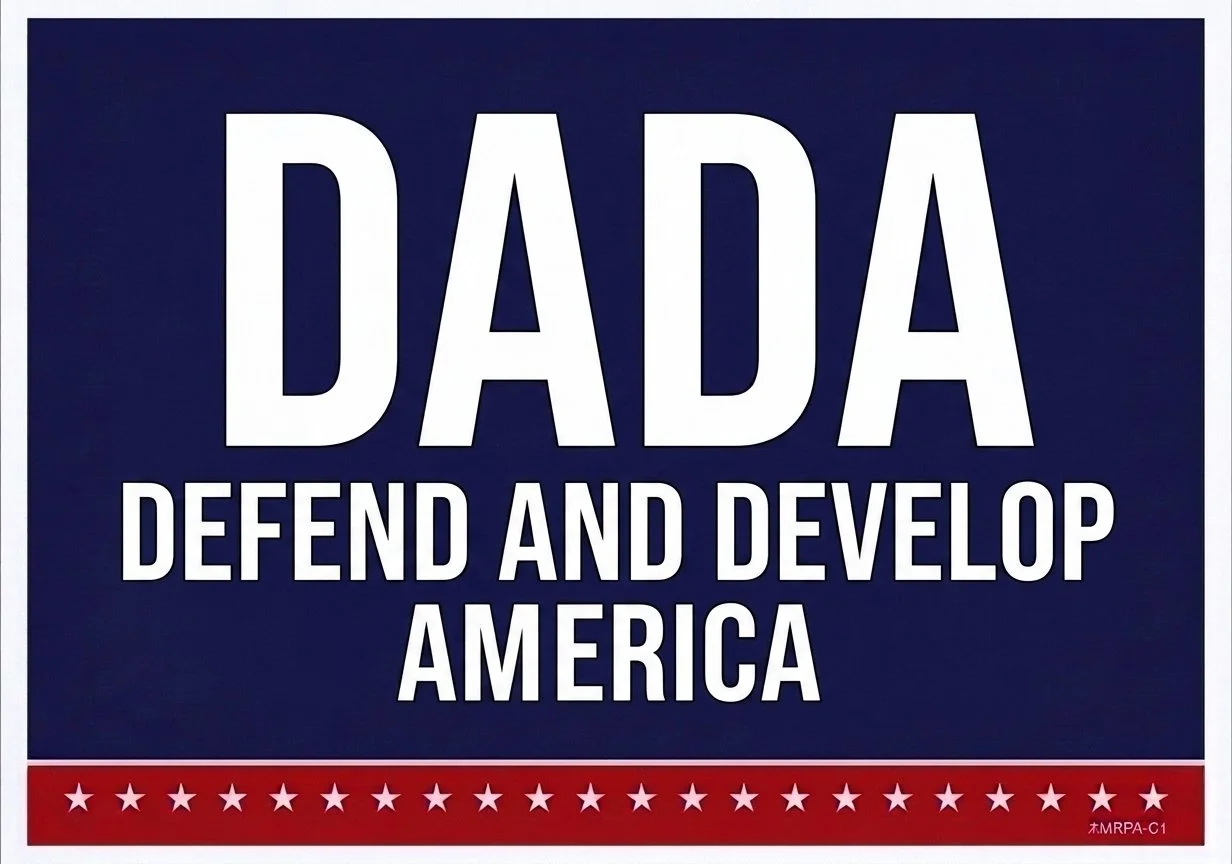
DADA isn’t just another political approach. It’s a commitment to doing better, thinking deeper, and working together. We’re not satisfied with the status quo, and we shouldn’t be.
What We’re Really About
Our core beliefs aren’t complicated:
We’ll put people first
We’ll listen more than we speak
We’ll challenge ourselves to grow
Breaking Down the Barriers
We can’t keep dividing ourselves. There’s too much at stake. Whether you’re from a small town or a big city, whether you’ve got money in the bank or you’re struggling to make ends meet, we’re in this together.
Our Shared Hopes
Economic Opportunity: We’ll create paths for everyone to succeed
Meaningful Dialogue: We’ll talk to each other, not at each other
Genuine Progress: We’ll measure success by how we lift each other up
Real Work Starts Now
This isn’t about political parties. It’s about human connection. We’ve got to:
Understand each other’s struggles
Recognize our shared humanity
Build bridges where walls have stood
Promise to Ourselves and Each Other
We’re not just dreaming of a better world. We’re rolling up our sleeves and making it happen. There’s no time to wait, no room for division.
Our Commitment
We’ll challenge the old ways of thinking. We’ll bring compassion back into politics. We’ll prove that together, we’re stronger than any force that tries to pull us apart.
Let’s make the world better. Not tomorrow. Not someday. Right now.
Together.
Sisterhood in Christ: Message of Love and Respect
Hey everyone,
As a follower of Christ, I’ve learned that true respect isn’t just a social concept – it’s a divine calling. Our faith teaches us that every person is created in God’s image, with inherent worth and dignity.
God’s Design for Mutual Respect
The Bible reminds us in Galatians 3:28 that in Christ, there is neither male nor female – we are all one in Jesus. This isn’t just about equality; it’s about seeing the divine value in every person.
What Christian Respect Looks Like
Our faith calls us to:
Treat girls with honor and respect
Listen with compassion
Protect the vulnerable
Speak up against injustice
Recognize the unique gifts God has given to all His children
Biblical Principles of Sisterhood
Proverbs 31:26 describes an ideal of a woman who “speaks with wisdom, and faithful instruction is on her tongue.” This isn’t about controlling or silencing, but about truly listening and valuing the wisdom of our sisters in Christ.
Call to Love
To my brothers – respecting women is more than a social obligation. It’s a reflection of Christ’s love. It’s about seeing each person as a precious child of God, worthy of dignity, respect, and love.
Our sisterhood in Christ is a powerful testament to God’s transformative love – a love that sees, hears, and values every individual.
Stay blessed, stay loving.